
Email Automation Is How Shopify Stores Turn Traffic Into Customer Relationships
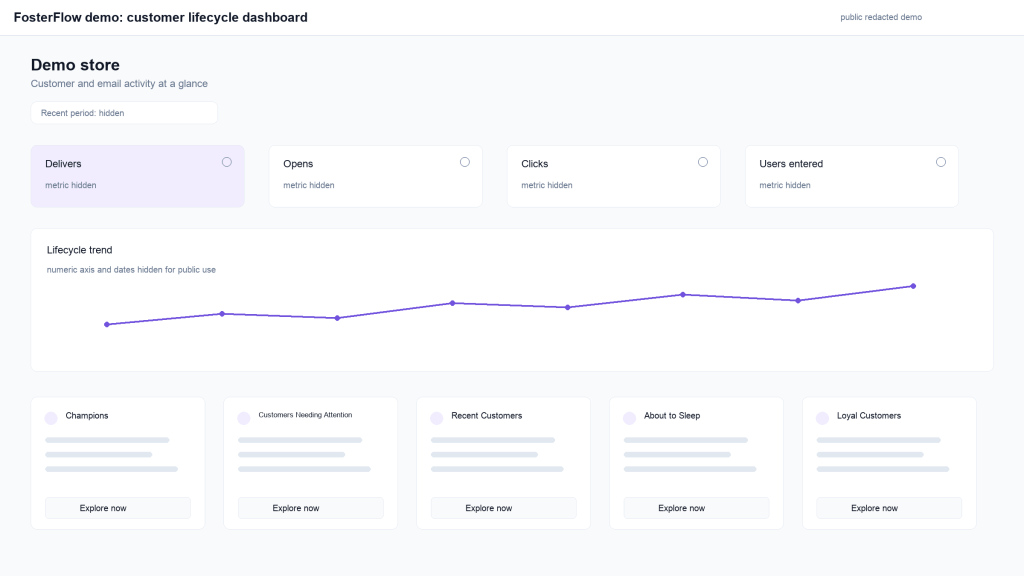
Traffic does not mean customer ownership.
That sounds obvious until you look at how many Shopify stores still operate as if every visitor is a one-time event. A shopper arrives through Meta, Google, TikTok, an influencer link, or a search result. They browse, add a product to cart, maybe place an order, and then the store goes quiet until the next campaign.
If the next visit depends on buying the same person again through paid media, the store owns a transaction, not yet a durable customer relationship.
Email automation is one of the first systems that changes this. Not because it lets a merchant send more newsletters or discount blasts, but because it turns Shopify customer behavior into lifecycle communication: who this customer is, what they just did, what stage they are in, what message should come next, and whether that message led to a click, order, repeat purchase, or higher customer value.
In other words, email automation should not be treated as a sending tool. For a serious Shopify store, it is a customer lifecycle system.
Email Automation Is Not Just Email Sending
Many merchants start with a simple mental model: email marketing means newsletters, holiday promotions, and clearance discounts. Those campaigns have a place, but they are only the surface layer.
A useful email system answers deeper operating questions:
- Who is this customer?
- What did they browse, add to cart, buy, or ignore?
- Are they a new subscriber, a first-time buyer, a repeat customer, or a dormant customer?
- What should the store say next?
- Did that message create revenue, repeat purchase, or a stronger customer relationship?
This is why the phrase “email list” can be misleading. A list is not the same thing as a customer asset. A list becomes useful only when it can be segmented, triggered, personalized, measured, and improved.
For Shopify merchants, the opportunity is already sitting inside the store: customer profiles, orders, products, carts, consent, browsing behavior, and engagement signals. Email automation is the operating layer that turns those signals into timely customer communication.
Why Shopify Stores Need Lifecycle Flows
Paid acquisition is still important. Most growing stores need new traffic, and paid channels remain one of the fastest ways to create demand. But paid traffic only solves the first part of the relationship: getting someone to notice the store.
The harder question is what happens after that first visit.
If a shopper subscribes, does the brand help them understand why it is worth trusting? If a shopper adds a product to cart and leaves, does the store provide a reasonable reminder or a missing trust signal? If a customer places a first order, does the brand educate them, request feedback, recommend the next best product, or invite a repeat purchase at the right moment?
Without those lifecycle systems, a store can keep buying attention without compounding customer relationships.
My rule of thumb is simple: if a store has to pay again every time it wants the same person to come back, it is still primarily running a traffic business. When it can keep customers reachable, understandable, segmented, and measurable after the first visit or order, it starts building a customer relationship business.
The First Three Flows Matter Most
It is tempting to build a large automation map immediately: browse abandonment, back-in-stock, winback, replenishment, cross-sell, upsell, loyalty, VIP, and seasonal flows.
Those can all matter later. But for most Shopify stores, the first system should be smaller and sharper.
Start with three flows.
1. Welcome Flow
The welcome flow is not just a polite greeting and a coupon. It is the first structured conversation after a customer gives the store permission to contact them.
A strong welcome flow helps a new subscriber understand:
- what the brand stands for
- why the products are different
- which products are best for a first purchase
- what proof or trust signals matter
- what step to take next
The goal is not to pressure every subscriber into an immediate purchase. The goal is to move a new relationship from “I found you” to “I understand why I might buy from you.”
2. Abandoned Cart / Checkout Flow
Cart abandonment is not a small edge case. Baymard’s 2026 cart abandonment research reports an average documented online shopping cart abandonment rate of 70.22%. That number does not mean every store can recover the same amount with email, and it should not be used as a universal ROI promise. But it does show that a large amount of purchase intent disappears near the end of the buying journey.
An abandoned cart or checkout flow is not about chasing customers aggressively. It is about responding to a high-intent moment with a useful reminder, missing information, social proof, shipping clarity, or a reason to complete the purchase.
The best abandoned checkout emails do not feel like noise. They feel like the store noticed a real point of friction and followed up at the right time.
3. Post-Purchase Flow
Many stores underinvest in the moment after the first order. That is a mistake.
A first purchase is the beginning of the relationship, not the end of the funnel. A post-purchase flow can deliver order education, usage instructions, shipping reassurance, review requests, product care tips, cross-sell recommendations, replenishment reminders, and repeat-purchase prompts.
The goal is not to sell again immediately. The goal is to make the customer feel that the brand still cares after payment, then guide them toward the next useful step.
Once these three flows work, the store can expand into browse abandonment, back-in-stock, cross-sell, upsell, and winback. But without welcome, abandoned checkout, and post-purchase flows, the lifecycle foundation is still thin.
Why Automated Flows Often Beat Campaigns
Campaigns happen when the merchant wants to speak. Flows happen when the customer does something.
That difference matters.
A customer who just subscribed, abandoned checkout, placed a first order, browsed a product category, or went dormant is giving the store context. Context makes the message more relevant. Relevance is what separates lifecycle email from generic email volume.
Klaviyo’s 2026 benchmark data is useful here with an important caveat. In its dataset, automated flows represent a smaller share of send volume but produce a disproportionately high share of email revenue, with higher revenue per recipient than campaigns. That should not be copied into a blanket promise for every merchant. But the underlying lesson is sound: behavior-triggered messages often carry stronger intent than broad promotional sends.
The practical question is not “How many emails should we send this week?”
The better question is: “Which customer behavior deserves a response, and what should the store say next?”
Where FosterFlow Fits
FosterFlow is built around this operating model. The product is not meant to make email feel like one more campaign channel. It is designed to help Shopify merchants connect customer data, segments, lifecycle triggers, email content, product recommendations, and attribution feedback.
The chain should look like this:
Shopify customer and order data -> customer segments -> lifecycle triggers -> email content and recommendations -> revenue and repeat-purchase feedback
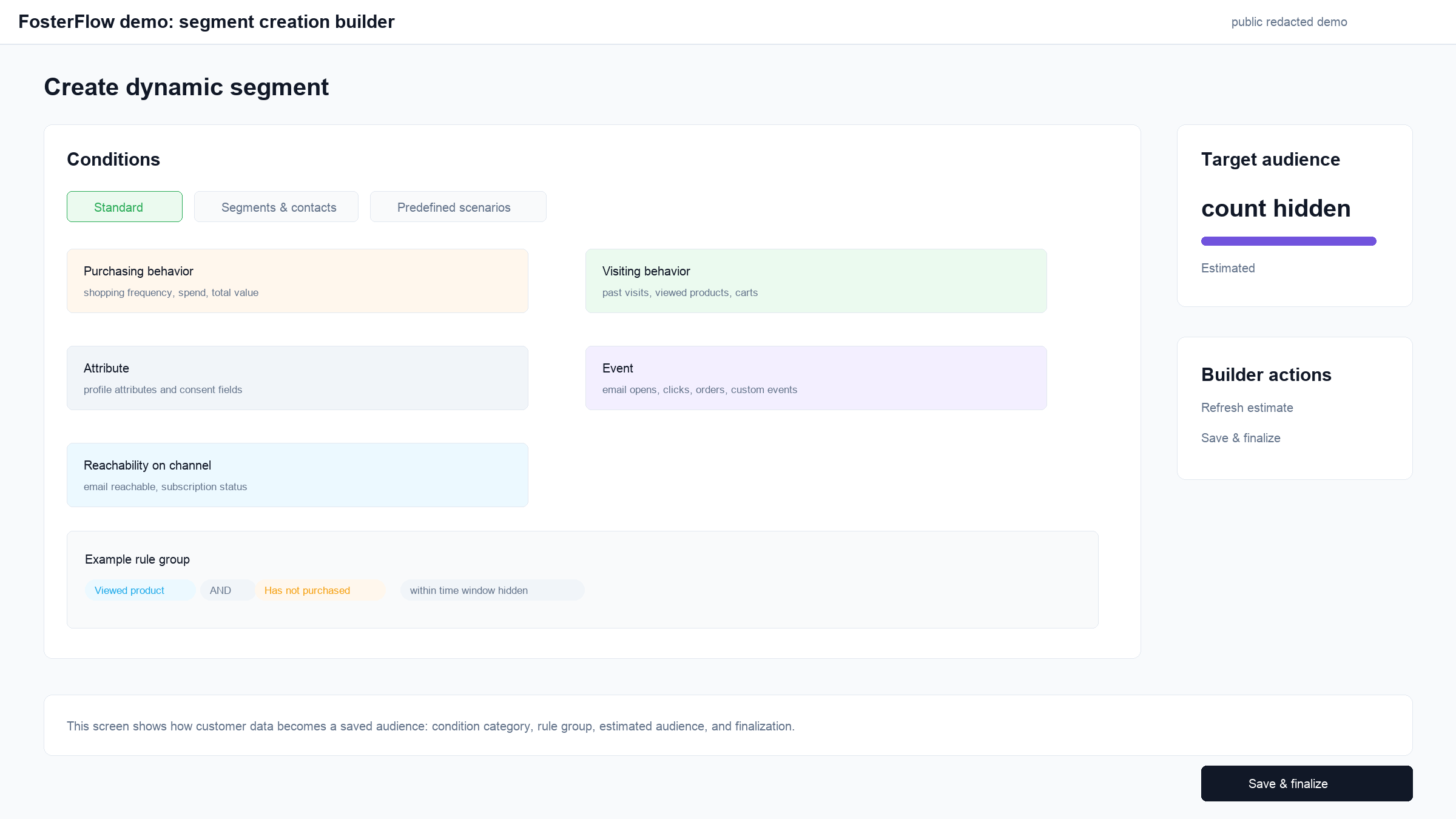
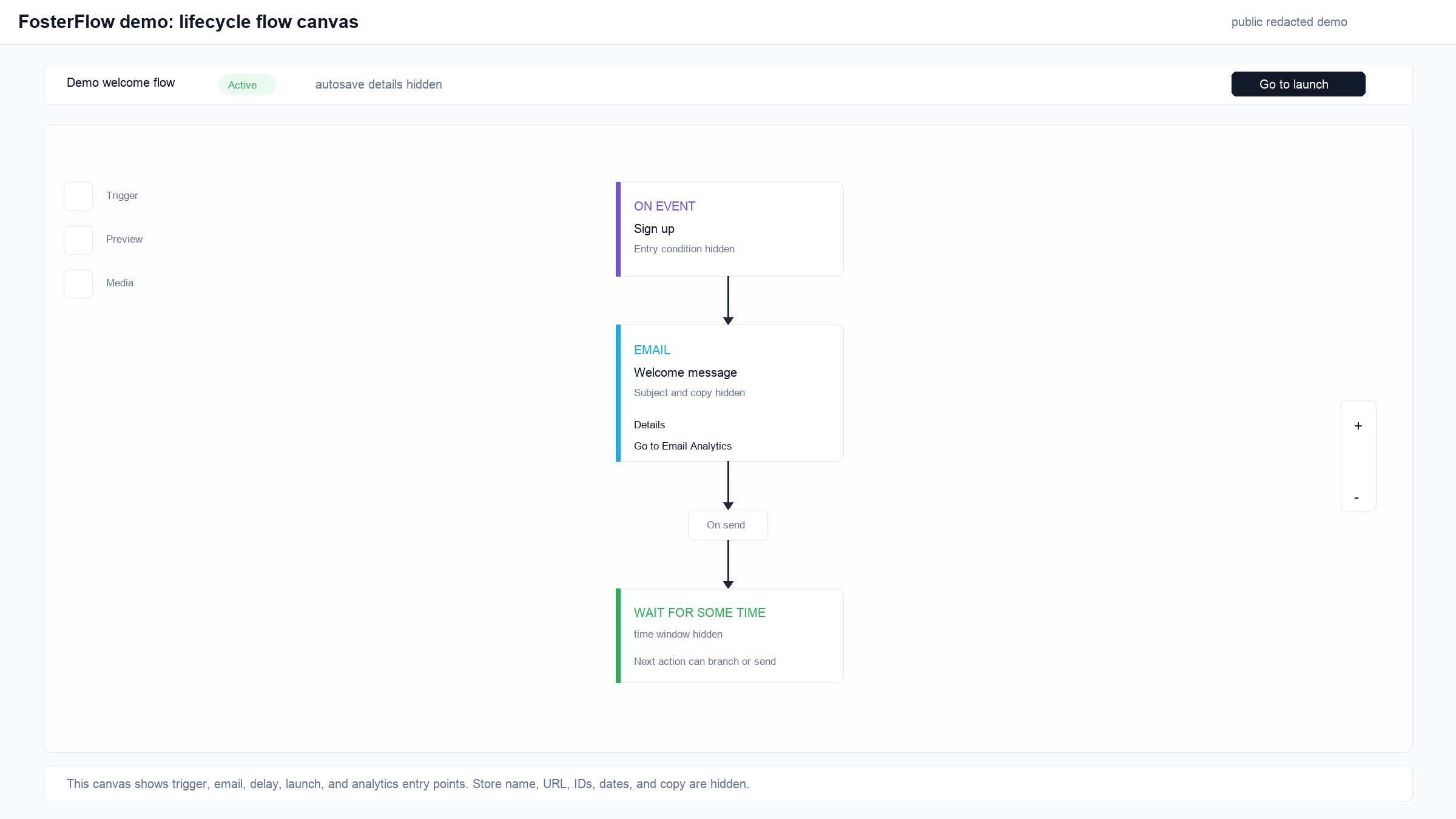
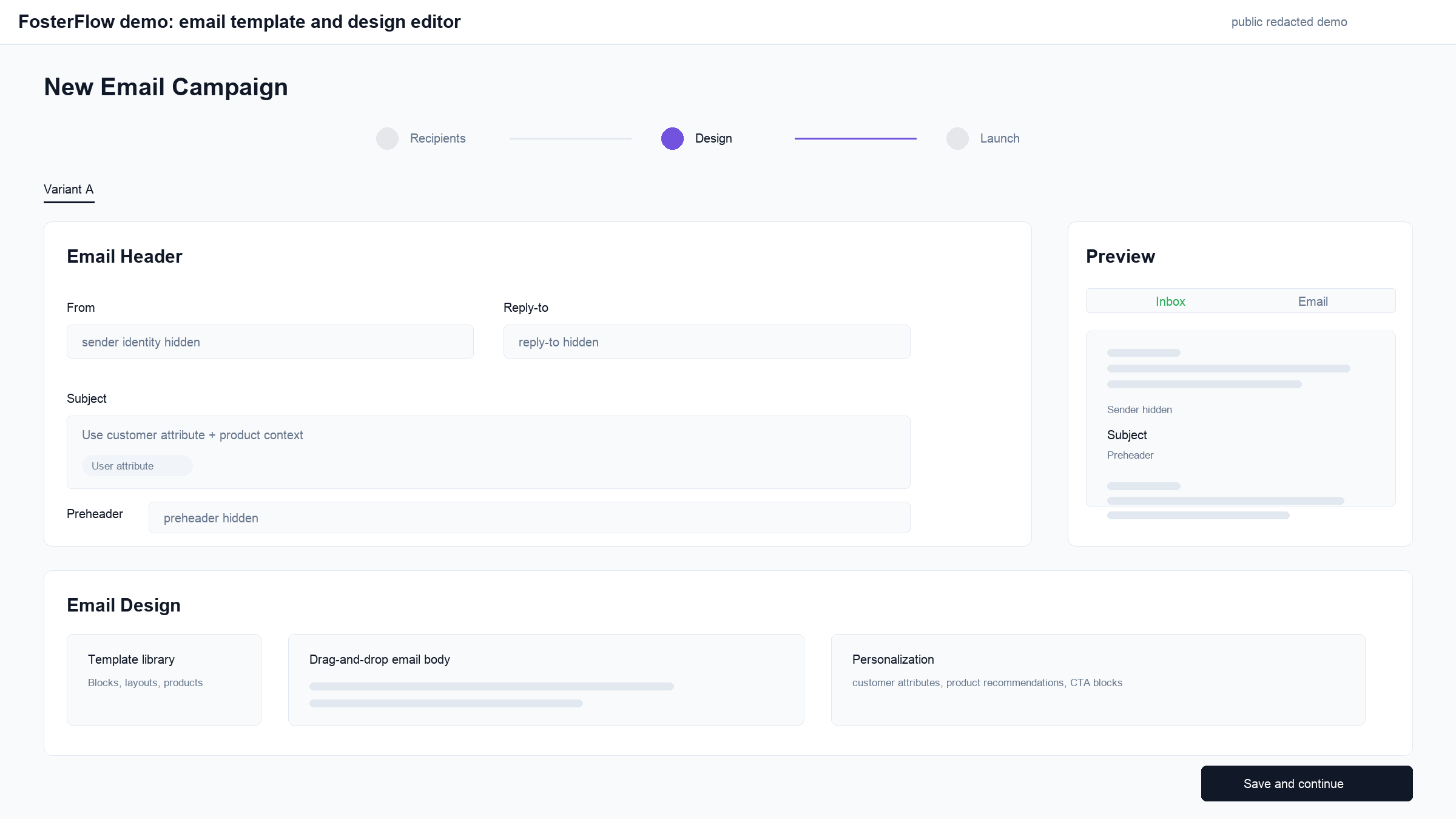
The screenshots below are public-safe, redacted product demos. They do not expose real customer data, store details, order IDs, revenue numbers, or private account information. They show the operating structure a lifecycle email system should have.
Start With Segments, Not Email Copy
Before writing the email, decide who should enter the lifecycle path.
Which customers browsed a product but did not buy? Which customers added to cart? Which customers bought once? Which customers are likely to become repeat buyers? Which customers are dormant? Which customers deserve VIP treatment?
Those questions decide what the store should say, when to say it, and how hard the message should push.
Make The Flow Visible
A lifecycle flow should not live only in someone’s memory or a spreadsheet. It needs to be visible and editable: trigger, email node, delay, branch, launch status, and analytics entry point.
When the customer behavior happens, the system should know the next step. The store should not depend on someone remembering to send a manual email.
Keep Content Inside The Lifecycle System
Email templates are not just about making a message look polished. They should control the sender, subject line, preheader, personalization, product recommendations, CTA, and preview in the context of the flow.
Welcome emails should build trust. Abandoned checkout emails should reduce hesitation. Post-purchase emails should extend the relationship. Content becomes more useful when it is tied to customer stage and behavior.
Measure Orders Without Worshiping Attribution
Email attribution needs care. A dashboard number should not be treated as absolute truth, and revenue should not automatically be credited to the last email a customer touched.
But stores still need a feedback structure. They need to know which flows are creating clicks, orders, repeat purchases, and customer value, and which flows only look active.
The public-safe attribution demo below shows FosterFlow-attributed order presence while hiding order IDs, amounts, customers, dates, and store details.

A Simple Starting Plan For Shopify Merchants
If you are starting from a basic Shopify email setup, do not begin with twenty automations.
Start with a minimum lifecycle system:
- Define customer stages: new visitor, subscriber, cart abandoner, first-time buyer, repeat buyer, dormant customer.
- Launch the three foundation flows: welcome, abandoned cart / checkout, and post-purchase.
- Give each flow one job: trust, hesitation reduction, or relationship extension.
- Review every two weeks: not just opens and clicks, but orders, repeat purchase, unsubscribes, complaints, and whether the flow made the customer relationship stronger.
This is less flashy than “AI writes all your emails.” But it is closer to how real ecommerce growth compounds.
AI becomes valuable when it helps the lifecycle system make better decisions: who should be contacted, when they should be contacted, what message should come next, and how the result should be interpreted.
That is the future of email automation for Shopify stores: not more email, but a smarter customer relationship operating layer.