
35 Best Thank You for Your Business Messages

A well-crafted thank you for your business message can turn a one-time buyer into a repeat customer who spends 67% more over their lifetime. That’s not speculation — Bain & Company’s research on customer retention economics has held up for over two decades. Whether you’re sending a post-purchase email, a handwritten note, or an automated flow triggered by a third order, the words you choose matter more than most Shopify merchants realize.
This collection of 35 thank you for your business messages covers every scenario you’ll face as an ecommerce store owner: first purchases, repeat buyers, holiday shoppers, wholesale clients, referral sources, subscription renewals, and more. Each message includes the full copy you can steal (or adapt), plus context on when and why it works. Because a generic “thanks for your order!” does almost nothing. A specific, well-timed appreciation message? That drives loyalty, reviews, and referrals.
Let’s get into the messages.
Why Thank You Messages Drive Revenue
Thank you messages aren’t a nicety. They’re a revenue lever.

A 2023 study by Klaviyo analyzing 18 billion emails found that post-purchase thank you emails have an average open rate of 67% — roughly 4× the open rate of standard promotional emails. When those emails include a personal touch (the customer’s name, what they bought, a genuine human tone), click-through rates jump another 25-30%. That’s not surprising when you think about the psychology: someone just gave you money, and their brain is primed for validation that they made a good decision.
Here’s what happens when you skip the thank you. Your customer gets a dry order confirmation with a tracking number. They wait. The package arrives. They use the product. If it’s good, maybe they come back. If it’s fine, they forget about you entirely. You become another faceless Shopify store in a sea of 4.4 million.
Now consider the alternative: within 30 minutes of purchase, they get a warm, specific thank you. It mentions the product they bought. It tells them something useful about it. It makes them feel like a person, not a transaction number. That single touchpoint changes their emotional association with your brand — and emotional associations drive 95% of purchasing decisions, according to Harvard Business School professor Gerald Zaltman.
The merchants who do this well tend to automate it using tools that respond to Shopify events in real time. FosterFlow’s behavior-triggered flows, for instance, can fire a personalized thank you within minutes of checkout — no coding required. But regardless of the tool, the principle is the same: time your gratitude, personalize it, and watch what happens to your repeat purchase rate.
How We Selected These 35 Messages
Every message in this list meets four criteria:

1. It sounds like a human wrote it. No corporate jargon, no “we appreciate your valued patronage.” Real language that a real store owner would actually send.
2. It fits a specific scenario. Each message is tagged with when to use it (first purchase, VIP milestone, holiday, etc.), so you’re not guessing.
3. It’s been tested or informed by real ecommerce data. Where possible, we reference open rate benchmarks, conversion data, or behavioral psychology research.
4. It can be adapted in under 2 minutes. Swap your brand name, product, and any specifics — and it’s ready to send.
We intentionally excluded messages that read like legal disclaimers or Fortune 500 PR statements. Your customers are humans shopping on Shopify stores. Talk to them like it.
1. The Classic First-Purchase Thank You
When to use it: Immediately after a customer’s first order.

> “Hey [First Name], your order just made our day. Seriously. We’re a small team, and every single order matters to us. Your [Product Name] is being packed up right now, and we can’t wait for you to try it. If you have any questions at all, just reply to this email — a real person reads every one. Thank you for choosing us.”
This message works because it does three things in under 70 words: it’s personal (“your order just made our day”), it sets expectations (“being packed up right now”), and it opens a conversation (“just reply to this email”). That last part is underrated. When customers know they can reply, they feel safer — and they’re less likely to dispute charges or leave negative reviews when something goes wrong.
The phrase “a real person reads every one” is worth its weight in gold. In a 2022 Tidio survey, 88% of consumers said they preferred interacting with a human over a chatbot. Even if you use AI to help draft responses (and you should), letting people know there’s a human in the loop builds trust fast.
2. The Warm Repeat-Buyer Appreciation
When to use it: When a customer places their second or third order.

> “[First Name], you’re back! That honestly means more than you know. A lot of stores talk about ‘loyal customers’ — but you’re actually being one, and we don’t take that lightly. As a small thank you, here’s [10% off / free shipping / a small gift] on your next order. You’ve earned it.”
Repeat buyers are your most profitable customers. According to Adobe Analytics data from 2023, returning customers generate 40% of ecommerce revenue despite being only 8% of all site visitors. Yet most Shopify stores treat their second-time buyers exactly the same as first-timers. That’s a missed opportunity.
This message acknowledges the behavior explicitly (“you’re back!”) and rewards it immediately. The discount or gift isn’t the point — the recognition is. People want to feel seen. When you call out that they chose you again, you reinforce the behavior loop that drives long-term loyalty.
If you’re running behavior-triggered flows in a tool like FosterFlow, you can set this to fire automatically when Shopify’s Events API registers a customer’s second completed checkout. No manual tagging, no spreadsheets.
3. The Milestone Order Celebration
When to use it: When a customer hits their 5th, 10th, or 25th order.

> “[First Name], can we just… pause for a second? This is your [10th] order with us. TEN. That’s not a customer — that’s family. We genuinely appreciate every single one of those purchases, and we wanted to mark the occasion. Check your inbox next week for something special (we’re not going to ruin the surprise). From all of us at [Brand Name]: thank you.”
The delayed reward (“check your inbox next week”) is a deliberate choice. It creates anticipation, which psychological research from the University of Amsterdam (Van Boven & Ashworth, 2007) links to increased positive emotion. The customer now has something to look forward to, and they’ll open your next email with genuine curiosity instead of the usual split-second-before-archiving decision.
This also works because it breaks the pattern. Most automated emails are transactional and predictable. An email that says “we’re not going to ruin the surprise” is unexpected — and unexpected positive experiences create disproportionately strong memories (a concept known as the peak-end rule, documented by Daniel Kahneman).
4. The Handwritten Note Style
When to use it: As an email that mimics the tone of a physical card, or printed and included in the package.

> “Hi [First Name] — I’m [Your Name], the founder of [Brand Name]. I wanted to personally thank you for your order. When I started this business [X years ago], I never imagined we’d be shipping [Product Name] to people like you. Every order reminds me why we do this. If there’s ever anything I can do to make your experience better, I’m at [email]. Thank you for supporting a small business. — [Your Name]”
This message converts at a higher rate when it comes from a named individual, not “the team.” The specificity of a founder’s name, a personal email address, and the story of when the business started creates an intimacy that a corporate message can’t replicate.
One thing that doesn’t work: faking it. If your brand has 200 employees, don’t pretend the CEO hand-writes notes. Customers can smell inauthenticity. Instead, have it come from the head of customer experience or the fulfillment lead — someone who genuinely interacts with orders.
5. The Seasonal Holiday Thank You
When to use it: During November-December holiday purchases, or around any major shopping holiday.

> “[First Name], we know you had about 10,000 options for [product category] this holiday season. And you picked us. That’s not lost on us — especially during a time when everyone’s inbox is screaming ‘BUY NOW’ in capital letters. We hope [Product Name] brings some real joy to whoever’s unwrapping it (even if that person is you — no judgment). Happy holidays from the entire [Brand Name] crew.”
Holiday emails are the noisiest period of the year. According to Mailchimp’s 2023 email benchmark report, average email volume increases 50-60% between Black Friday and Christmas. Most of those emails are promotions. A genuine thank you message during this period stands out precisely because it isn’t trying to sell anything.
The parenthetical “(even if that person is you — no judgment)” adds levity. Humor in post-purchase emails is rare, which makes it memorable. Just don’t force it — bad humor is worse than no humor.
6. The Post-Review Thank You
When to use it: After a customer leaves a positive review.

> “[First Name], we just saw your review of [Product Name], and honestly? It made our whole week. Reviews like yours help other shoppers feel confident choosing us — and they remind our team why the late nights are worth it. Thank you for taking the time. It means more than a star rating can capture.”
This is a thank you for your business message with a secondary purpose: reinforcing review-leaving behavior. When you thank someone for a review, they’re more likely to leave one next time too. It’s basic operant conditioning — reward the behavior you want repeated.
Don’t include a discount in this email. It creates an awkward transactional feeling (“oh, they’re paying me for the review”). Just genuine appreciation. The relationship equity you build is worth more than a 15% coupon.
7. The Subscription Renewal Gratitude
When to use it: When a subscription renews for the 3rd+ time.

> “[First Name], your [Product Name] subscription just renewed — and we wanted to take a second to say thanks. It would’ve been easy to cancel (we know, the button’s right there). But you didn’t. That trust means everything to a brand our size. Your next shipment is on its way, and we’ve made sure it’s packed with the same care as your first one.”
Subscription businesses live and die by churn rate. For Shopify merchants running subscription models, the average monthly churn rate hovers around 7-10% (Recurly’s 2023 State of Subscriptions report). Every renewal that doesn’t churn is a small victory, and acknowledging it out loud — “it would’ve been easy to cancel” — shows self-awareness that customers respect.
The line about packing “with the same care as your first one” addresses a real anxiety: that subscription quality degrades over time. Many subscription customers worry they’ll get worse products or less attention after the initial wow period. This message preemptively counters that fear.
8. The Big-Ticket Purchase Thank You
When to use it: For orders above your average order value (e.g., $200+).

> “[First Name], that’s a big purchase — and we don’t take that lightly. When someone trusts us with [dollar amount] of their hard-earned money, we feel a real responsibility to make it exceptional. Here’s what happens next: [1-2 sentences about shipping timeline, quality checks, etc.]. And if anything — anything — isn’t perfect when it arrives, email us at [address]. We’ll make it right, no questions asked.”
Big-ticket buyers experience more post-purchase anxiety than average-order buyers. It’s called buyer’s remorse, and it hits hardest in the 24-48 hours after a major purchase. This message fights remorse directly by (a) validating the purchase, (b) explaining what happens next, and (c) offering an unconditional guarantee.
The “no questions asked” return promise is particularly powerful for high-AOV orders. It might feel risky, but Zappos proved decades ago that generous return policies increase net revenue — because customers buy more when the safety net is visible.
9. The Referral Thank You
When to use it: When someone refers a friend who makes a purchase.
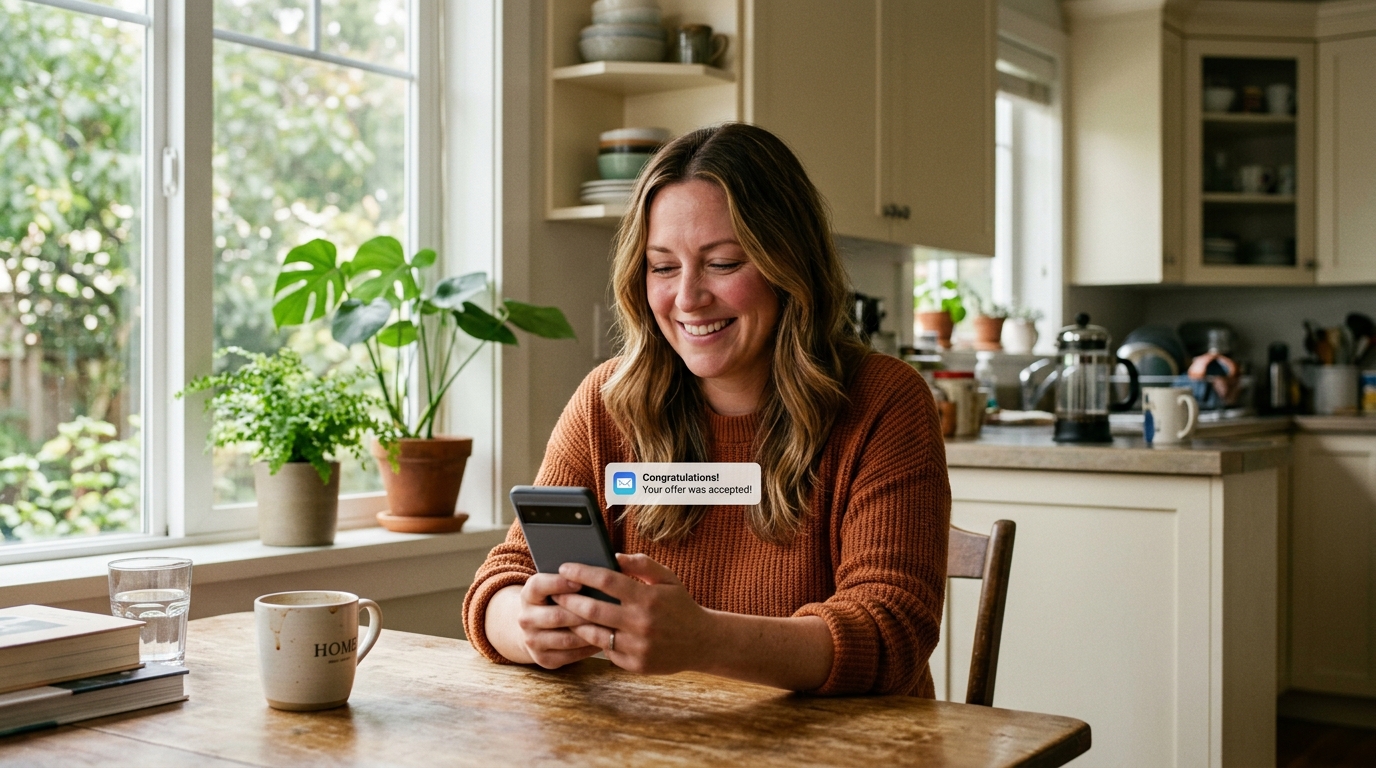
> “[First Name], someone just bought from us because of you. Your friend [Friend’s First Name] placed an order, and they mentioned you sent them our way. That kind of word-of-mouth is something no ad budget can buy — and it means the world to us. As a thank you, here’s [reward]. But really, the biggest thanks is just… thank you for believing in us enough to tell someone else.”
Referrals convert at 3-5× the rate of other acquisition channels (Wharton School of Business, 2019). They also have a 16% higher lifetime value. When someone refers a friend, they’re putting their own social capital on the line — and that deserves more than a coupon code in an automated email.
This message does something subtle: it names the friend. “Your friend [Name] placed an order” triggers a dopamine hit because the referrer sees their action produced a concrete result. It’s the same reason fundraising platforms show you exactly who donated after you shared a campaign link.
10. The Cart Abandonment Recovery Thank You
When to use it: After a customer who abandoned their cart comes back and completes the purchase.

> “[First Name], we’re glad you came back. We know there are a hundred reasons to leave something in a cart — budget, timing, comparing options, the dog started barking. Whatever it was, we’re happy you decided [Product Name] was worth it. We think you made a great call. Your order’s on its way.”
Most cart abandonment emails are naggy. “You forgot something!” “Your cart is waiting!” This message takes the opposite approach: it acknowledges the abandonment without making the customer feel guilty, then validates the decision to return.
The humorous aside about the dog is intentional. It normalizes cart abandonment (which happens to roughly 70% of online carts, per Baymard Institute’s 2024 analysis) and removes any stigma. The customer feels understood, not pursued.
If you’re using AI email marketing tools to optimize your cart recovery flows, consider A/B testing this softer approach against your current abandonment recovery sequence. You might be surprised.
11. The Wholesale or B2B Client Thank You
When to use it: After a business customer places a bulk or wholesale order.

> “Hi [First Name], thank you for your wholesale order of [quantity] [Product Name]. We understand that choosing a supplier for your business is a decision that affects your bottom line, your reputation, and your customers’ experience. We take that seriously. Your dedicated account contact is [Name] at [email], and we’ve prioritized your order for [shipping timeline]. Looking forward to a long partnership.”
B2B buyers need different reassurance than B2C customers. They’re not buying for personal enjoyment — they’re making a business bet. This message acknowledges that weight (“affects your bottom line, your reputation”) and immediately reduces anxiety with a named contact and specific timeline.
The word “partnership” at the end is deliberate. B2B relationships that frame themselves as partnerships retain 23% longer than those that use vendor/client language, according to a 2022 Forrester report on B2B buyer experience.
12. The “We Messed Up But Fixed It” Thank You
When to use it: After resolving a customer service issue.

> “[First Name], first — thank you for your patience. We dropped the ball on [specific issue], and you gave us the chance to fix it instead of just walking away. Not everyone does that. We’ve [specific resolution], and we’ve also flagged this internally so it doesn’t happen again. As a genuine thank you for sticking with us, here’s [small gift/discount]. You deserved better, and next time you’ll get it.”
This is one of the most powerful thank you for your business messages on this list, and it’s the one most stores are afraid to send. Admitting failure feels vulnerable. But research from the Journal of Service Research (2018) found that customers who experience a service failure that’s well-recovered rate their satisfaction higher than customers who never had a problem at all. It’s called the service recovery paradox.
The key phrase is “you gave us the chance to fix it instead of just walking away.” It frames the customer as generous, which they were. People who feel appreciated for their patience become fiercer advocates than people who never had reason to test the relationship.
13. The One-Year Anniversary Thank You
When to use it: On the anniversary of a customer’s first purchase.

> “[First Name], one year ago today, you placed your first order with [Brand Name]. A lot has happened since then — for us and probably for you too. But we wanted to mark this little anniversary because you’ve been part of our story for an entire year now. Thank you for being here. Here’s to year two.”
Anniversary emails have some of the highest engagement rates in ecommerce — Omnisend’s 2023 data shows they average 35.4% open rates and 7.1% click rates. Yet fewer than 15% of Shopify stores send them. That’s free real estate.
The “a lot has happened since then” line works because it’s universally true and creates a moment of reflection. People naturally feel sentimental around milestones. Tapping into that emotion at the right moment is what separates good email marketing from great email marketing.
You can set these up as automated flows triggered by the customer creation date in Shopify — most modern email platforms, including FosterFlow, can calculate time-based triggers from that original event.
14. The Social Media Shoutout Thank You
When to use it: When a customer tags you or posts about your product on social media.

> “[First Name], we just saw your post about [Product Name] on [Instagram/TikTok], and we had to reach out. YOU. MADE. OUR. DAY. User-generated content like yours is the most authentic marketing we could ever hope for — and we’d never take it for granted. Would you be cool with us resharing it? Either way, thank you for spreading the word. It means everything.”
UGC (user-generated content) drives 29% higher conversion rates than campaigns without it, according to Stackla’s 2023 consumer content report. But here’s the thing most brands miss: the thank you itself creates more UGC. When customers feel appreciated for posting, they post more. It’s a virtuous cycle.
Asking permission to reshare (“would you be cool with us resharing it?”) is both legally smart and relationally warm. It positions the customer as a collaborator, not a free content source.
15. The Pre-Launch Supporter Thank You
When to use it: For customers who purchased during a new product launch or pre-order.

> “[First Name], you were one of the first people to order [Product Name] — before the reviews were in, before anyone else had tried it. That’s a level of trust we don’t take for granted. Early supporters like you are literally the reason this product exists. We’re keeping you on a special list for first access to everything we launch from here on out.”
Pre-launch buyers are taking a genuine risk. They’re buying something unproven, and acknowledging that risk explicitly makes this message land harder than a generic thank you. The promise of “first access to everything we launch” converts this one-time risk into an ongoing VIP relationship.
Don’t say “special list” without following through. Actually tag these customers in your email platform and give them early access. Broken promises erode trust faster than silence does.
16. The Gift Buyer Thank You
When to use it: When the shipping address differs from the billing address (likely a gift purchase).

> “[First Name], it looks like you’re sending [Product Name] as a gift — and whoever’s receiving it is lucky. We’ve packed it with extra care (because nobody wants a gift that looks like it went through airport security). If you’d like us to include a gift note, just reply with what you’d like it to say and we’ll handwrite it.”
This message demonstrates attention to detail that most stores lack. Detecting a gift purchase by comparing billing and shipping addresses is simple technically but feels magical to the customer. The offer to handwrite a gift note is an extraordinary touch — and it costs you maybe 90 seconds per order.
The humor about airport security is light enough to land broadly but specific enough to create a mental image. That’s the sweet spot for email humor: visual, relatable, and not trying too hard.
17. The Post-Event or Sale Thank You
When to use it: After a major sale event (Black Friday, anniversary sale, flash sale).

> “[First Name], our [Sale Name] just ended, and we’re still catching our breath. We sold [X units / served X customers] in [timeframe], and your order was part of that. Behind every number is a person who chose to spend their money with us during the most competitive shopping period of the year. That’s not background noise to us. Thank you.”
Sharing real numbers (“we sold 4,200 units in 72 hours”) accomplishes two things: it creates social proof (that many people can’t be wrong) and it shows transparency that builds trust. Most brands hide their sales data. Sharing it — even partially — feels like being let behind the curtain.
This message also reframes the customer’s experience. During a flash sale, buying can feel impulsive and transactional. This email retroactively gives it meaning: “your order was part of that.” You’re turning a discount-driven purchase into a community moment.
18. The Feedback-Requesting Thank You
When to use it: 7-14 days after delivery, when the customer has had time to use the product.

> “[First Name], it’s been about a week since your [Product Name] arrived, and we’re genuinely curious: how’s it going? We read every piece of feedback personally — the good stuff, the honest stuff, all of it. If you’ve got 30 seconds, we’d love to hear your thoughts [link to quick survey or reply prompt]. And regardless — thank you for being a [Brand Name] customer.”
The timing here matters more than the words. Send this too early (day 1-2), and the customer hasn’t used the product. Send it too late (day 30+), and the emotional connection to the purchase has faded. The 7-14 day sweet spot is backed by research from PowerReviews (2023), which found that review request emails sent 7-10 days post-delivery generate 2× more responses than those sent at other intervals.
“The good stuff, the honest stuff” gives explicit permission for negative feedback. That’s counterintuitive but effective — customers who feel safe being honest are more likely to respond at all, and most feedback is positive anyway. The ones who share problems? They’re giving you free product development data.
19. The Cross-Sell Thank You
When to use it: Post-purchase, recommending a complementary product.

> “[First Name], great choice on [Product Name]. Quick thought: a lot of customers who buy [Product] pair it with [Complementary Product] — and the combo is genuinely better together than either one alone. Not a hard sell, just a heads up. If it’s not for you, no worries. Either way, thanks for your order. We’re already packing it up.”
This message walks a fine line. It’s technically a cross-sell, but it leads with gratitude and frames the recommendation as helpful, not pushy. The phrase “not a hard sell, just a heads up” preemptively defuses any sales resistance.
Cross-sell emails in the post-purchase flow generate 3× more revenue per email than standalone promotional emails, according to Drip’s 2023 ecommerce email report. That said, the product recommendation needs to be genuinely complementary. Recommending random products erodes trust. Recommending something that actually makes their purchase better builds it.
For merchants using dynamic segmentation, tools like FosterFlow can automatically pair complementary products based on what the customer just bought — pulling from real purchase data, not generic “customers also bought” algorithms.
20. The Win-Back Thank You
When to use it: When a lapsed customer (no purchase in 90+ days) returns and buys again.

> “[First Name], look who’s back! It’s been a while, and honestly? We missed you. Not in a weird way — in a ‘we-notice-when-our-favorite-customers-aren’t-around’ way. Thank you for coming back. A lot of brands fight to get customers back and never say thanks when it works. We’re not those brands.”
Win-back emails are one of the most valuable automated flows in ecommerce, but the thank you after a win-back conversion is almost never sent. Most brands celebrate getting the lapsed customer’s email open and click — and then treat the resulting purchase like any other order. That’s a waste of a highly emotional moment.
When someone comes back after a long absence, they’ve consciously chosen you again. That decision deserves more than a receipt. This message names the elephant in the room (“it’s been a while”) and makes the customer feel valued for returning.
21. The Loyalty Program Welcome Thank You
When to use it: When a customer joins your loyalty or rewards program.

> “[First Name], welcome to [Program Name]! You’ve already got [X points] from your past purchases — which is a head start most new members don’t get. Here’s how it works in 10 seconds: [1 sentence explaining points earning]. [1 sentence explaining redemption]. That’s it. No complicated tiers, no math. Thank you for joining. Let’s make it worth your while.”
Loyalty program welcome emails with a current points balance have 42% higher engagement than those without, according to Bond Brand Loyalty’s 2023 report. The reason is simple: showing existing points creates a psychological ownership effect. The customer now has something to protect and grow.
The “10 seconds” framing and deliberately short explanation respects the customer’s time. Most loyalty program emails are overloaded with tier structures, point multipliers, and terms that require a calculator. Keep it dead simple. You can explain advanced features later.
22. The User-Generated Content Thank You
When to use it: After a customer submits a photo or video review.

> “[First Name], the photo you sent of [Product Name] is incredible. Like, we want to print it and frame it in our office incredible. Visual reviews like yours help other customers see what [Product Name] actually looks like in real life — not just our studio lighting. Would you be okay with us featuring it on our product page? We’ll credit you by name (or keep it anonymous, your call).”
Photo and video reviews increase conversion rates by 65% compared to text-only reviews (Bazaarvoice, 2023). This message does double duty: it expresses genuine gratitude while also securing permission to use high-value content. The “credit you by name” option appeals to customers who enjoy recognition. The anonymity option respects those who don’t.
Notice the specificity: “the photo you sent” with the product named. This is not a template that could apply to anyone. It’s a response to a specific action, which makes it feel personal even when it’s automated.
23. The Charitable Partnership Thank You
When to use it: When a purchase triggers a donation or charitable contribution.

> “[First Name], your order just did something extra. Because you purchased [Product Name], we donated [$X / a meal / etc.] to [Charity Name]. That’s not marketing — it’s math. Every order of [Product] funds [specific outcome]. You didn’t just buy something for yourself. You bought something for someone who needed it. Thank you.”
Cause-related purchases are growing fast. A 2023 Edelman Trust Barometer study found that 64% of consumers will buy or boycott a brand based on its stance on social issues. But vague “we give back” messaging doesn’t cut it. Specificity does.
“We donated $2 to Feeding America” beats “a portion of proceeds goes to charity” every time. The first is concrete and verifiable. The second sounds like lip service. This message makes the impact tangible and ties it directly to the customer’s action, giving them ownership of the outcome.
24. The Bundle or Multi-Item Thank You
When to use it: When a customer orders 3+ items or a curated bundle.

> “[First Name], you went all in — and we love it. Your order of [Item 1], [Item 2], and [Item 3] is giving us serious curation envy. We’ve packed each item separately to make sure everything arrives in perfect condition. Pro tip: [one specific tip about using the items together]. Thank you for trusting us with your whole [product category] setup.”
Listing the specific items back to the customer serves a psychological function: it reinforces the purchase decision by naming each item as a deliberate choice, not an impulse buy. The “pro tip” adds immediate value — and it shows expertise that generic thank you messages lack.
Multi-item orders also represent your highest-AOV customers, who deserve disproportionate attention. If someone spends $300 on five products from your store, they should feel like a VIP, not get the same email as someone who bought a $15 accessory.
25. The First-Time Category Explorer Thank You
When to use it: When a customer buys from a product category they’ve never purchased from before.

> “[First Name], we noticed something — this is your first time trying our [Category Name] line. That’s exciting for us because we pour a ridiculous amount of time into getting [Category] right. If you love it (and we think you will), you should also check out [specific related product]. And if it’s not quite right, tell us. We’d rather hear it from you than lose you. Thanks for exploring with us.”
This message works because it celebrates exploration. When a customer who normally buys your skincare tries your haircare line for the first time, that’s a meaningful behavior worth acknowledging.
The willingness to hear negative feedback (“if it’s not quite right, tell us”) is a trust-building move. It positions the brand as confident enough in its products to invite criticism — which paradoxically makes the customer more likely to be satisfied.
Smart segmentation makes this message possible. FosterFlow’s real-time customer segmentation, for example, updates with every Shopify event, so you’d know the moment a customer ventures into a new category.
26. The Surprise Upgrade Thank You
When to use it: When you upgrade a customer’s order (faster shipping, larger size, bonus item).
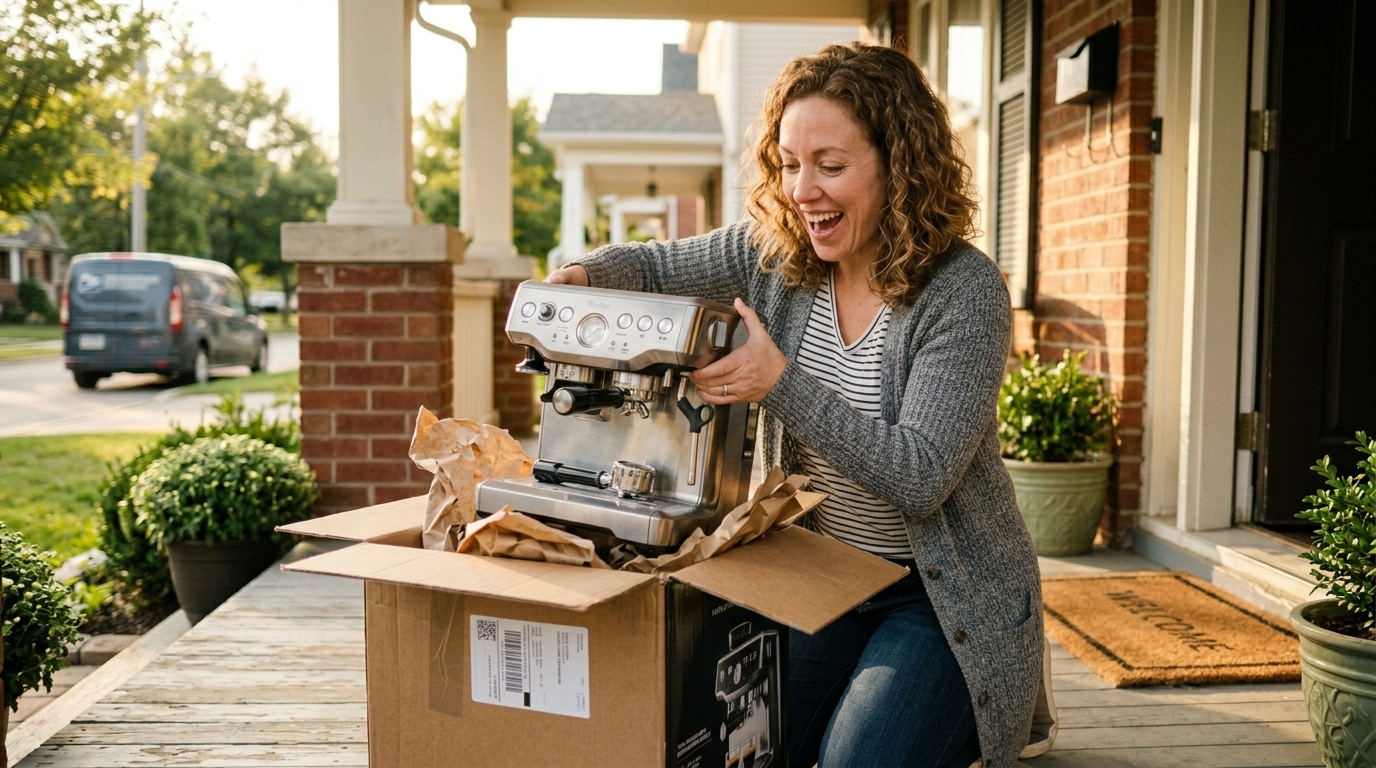
> “[First Name], heads up — we upgraded your order. You ordered standard shipping, but we bumped you to express at no extra charge. Why? Because you’ve been a great customer, and sometimes we like to do things like this. No catch. No ‘share this with 10 friends’ requirement. Just a thank you for being part of [Brand Name].”
Surprise upgrades trigger what behavioral economists call “positive reciprocity” — when someone receives an unexpected gift, they feel compelled to give back. That might mean a 5-star review, a social media post, a referral, or simply continued loyalty. The ROI on a free shipping upgrade is almost always positive.
The “no catch” clarification matters because consumers are trained to expect strings attached. Being explicit about the absence of strings is itself a form of generosity.
27. The Customer Service Follow-Up Thank You
When to use it: 48 hours after a customer service interaction (whether or not a purchase was involved).

> “[First Name], we just wanted to check — is everything sorted after our conversation on [date]? [Support Rep Name] mentioned they helped you with [specific issue], and we want to make sure it’s fully resolved. If it is, amazing. If it’s not, just reply here and we’ll jump back on it. Thank you for reaching out in the first place — it helps us get better.”
Most companies never follow up after customer service interactions. Closing the loop with a quick check-in sets you apart from 90%+ of the ecommerce brands your customer has interacted with.
Naming the support rep and the specific issue shows that you’re tracking the relationship, not just processing tickets. And the closing line — “it helps us get better” — reframes the customer’s complaint as a contribution, which feels much better than being a “problem” that got “resolved.”
28. The Back-in-Stock Purchase Thank You
When to use it: When a customer buys a product they previously signed up for back-in-stock notifications on.

> “[First Name], you waited for [Product Name] to come back — and you grabbed it. That kind of patience and loyalty is rare, and we don’t want you to think it went unnoticed. The reason it was out of stock? Honestly, demand blew past our projections. We’ve doubled our next production run so this shouldn’t happen again. Thank you for waiting for us.”
This message acknowledges a very specific customer journey: they wanted something, it wasn’t available, they waited, and they followed through. That’s extraordinary loyalty, and naming each step of it creates a powerful emotional connection.
Explaining why the product was out of stock (high demand) serves double duty as social proof. “Demand blew past our projections” subtly tells the customer that lots of other people wanted this too, which validates their choice.
29. The Holiday Gift Guide Feature Thank You
When to use it: When a customer purchased based on a gift guide or curated collection you created.

> “[First Name], great picks from our [Holiday/Season] gift guide! Curating that guide took our team [actual timeframe] — [Name] taste-tested everything, [Name] photographed it all, and we debated the final lineup for way too long. So when someone actually shops it, we feel validated in the best way. Thank you for trusting our picks.”
Behind-the-scenes details humanize the brand. Naming team members who worked on the gift guide makes the store feel like people, not a website. And the admission that they “debated the final lineup for way too long” is the kind of honest, slightly self-deprecating detail that feels authentically human.
This approach works well for smaller Shopify stores where the founder and team are genuinely involved in curation. Larger stores can adapt by featuring the buyer or merchandiser who assembled the collection.
30. The Subscription Cancellation Win-Back Thank You
When to use it: When a customer who canceled their subscription comes back and re-subscribes.

> “[First Name], you came back. We won’t pretend we didn’t notice you were gone — but we also won’t pretend to know why you left. What we will say: whatever we needed to fix, we hope we’ve fixed it. And if we haven’t, tell us. We’d rather hear the hard truth than lose you again. Welcome back, and genuinely — thank you.”
This is vulnerable. Most brands would never say “whatever we needed to fix.” But vulnerability breeds trust, and this message respects the customer’s intelligence by not pretending the cancellation didn’t happen.
The line “we’d rather hear the hard truth than lose you again” is powerful because it demonstrates that the brand values the relationship over its own comfort. Customers who re-subscribe after cancellation have a 60% higher retention rate in their second stint if they feel heard during the return (Recurly, 2023).
31. The Local Community Thank You
When to use it: When a customer is in your local area or you’re a local brand with ecommerce.

> “[First Name], we saw you’re from [City/Region] — that’s our home turf! There’s something special about shipping to a neighbor. If you’re ever near [physical location or local landmark], stop by and say hi. We’ll have [coffee/a sample/a high five] waiting. Thank you for supporting local, even when Amazon is right there.”
Local-angle messaging generates 20% higher engagement in email campaigns, according to Mailchimp’s 2023 segmentation benchmarks. The “even when Amazon is right there” line is candid, and it names the competitor your customer already considered. That level of honesty disarms skepticism.
This message only works if you actually have a local presence — a warehouse, a pop-up shop, or even just a founding story tied to a specific place. Don’t fake local connection. Customers will check.
32. The Eco-Conscious Shopper Thank You
When to use it: When a customer chooses eco-friendly packaging, carbon-neutral shipping, or a sustainable product.

> “[First Name], you chose [eco option], and that choice has a real impact. Specifically: [X grams of CO2 offset / X grams of plastic avoided / etc.]. We started offering [eco option] because customers asked for it — and every time someone actually selects it, it tells us we made the right call. Thank you for putting your values into your shopping cart.”
Specificity is everything here. “X grams of CO2 offset” is infinitely more credible than “you helped the planet.” According to the NYU Stern Center for Sustainable Business (2023), products with specific environmental claims outsell those with vague claims by 28%.
The final line — “putting your values into your shopping cart” — is a memorable phrase that connects the abstract (values) to the concrete (a shopping cart). That’s the kind of copywriting that gets shared on social media.
33. The “You Completed the Set” Thank You
When to use it: When a customer buys the final item in a product collection they’ve been assembling over multiple orders.

> “[First Name], we just realized something: with this order of [Product Name], you now own the entire [Collection Name]. The whole thing. Do you know how rare that is? Fewer than [X]% of our customers complete a full set. You’re officially a completionist, and we respect it deeply. As a fellow collector (of too many things), thank you. This one feels special.”
Completionist psychology is real — just ask anyone who’s collected all the colors of a product line or assembled a full set of anything. When a customer hits that milestone, calling it out explicitly triggers a deep satisfaction response. The “fewer than X% of our customers complete a full set” stat adds exclusivity, which amplifies the feeling.
This message requires good data: you need to know the customer’s purchase history across multiple orders. If your email platform integrates deeply with Shopify’s customer and order data (the way FosterFlow does with full Events API coverage), this kind of message becomes a simple trigger based on order history.
34. The “You Were Right” Thank You
When to use it: When a customer’s past feedback led to a product improvement or new feature.

> “[First Name], remember when you told us [specific feedback]? We listened. As of [date], we’ve [specific change: new product feature, improved packaging, updated formula, etc.]. We wanted you to know because this change happened partly because of you. Customer feedback is easy to ask for and hard to act on. We’re trying to do the hard part. Thank you for pushing us to be better.”
This might be the highest-impact thank you message on this entire list. It closes the feedback loop in a way that’s so rare, customers will screenshot it and share it with friends. “You said something. We did something about it. Here’s proof.” That sequence builds the kind of brand loyalty that no discount code ever will.
The phrase “easy to ask for and hard to act on” is honest in a way that most brands aren’t willing to be. It acknowledges the gap between collecting feedback and implementing it — and then shows that the brand bridged that gap. For the customer, this is deeply validating.
35. The Exit-Intent Recovery Thank You
When to use it: When a customer who triggered an exit-intent popup later completes their purchase.

> “[First Name], we’re so glad that last-minute save worked out. You were about to leave, something pulled you back, and now [Product Name] is headed your way. Whether it was the [discount/free shipping/product description] that sealed the deal — we’re just happy you’re here. Thank you for giving us a second chance. We won’t waste it.”
Exit-intent popups recover 5-15% of abandoning visitors (OptinMonster, 2023). But the follow-up email after that recovery is rarely optimized. Most stores send a generic order confirmation. This message acknowledges the journey: you almost left, but you didn’t.
“Thank you for giving us a second chance” frames the relationship with stakes. The customer feels like they did something meaningful by staying, and the brand signals that it values the relationship enough to promise “we won’t waste it.”
If you’re exploring ways to pair exit-intent recovery with smart newsletter signup strategies, you can create a system where recovered visitors enter a dedicated nurture sequence that feels personalized from the very first touch.
How to Automate Thank You Messages in Shopify
Writing 35 messages is one thing. Sending them at the right time to the right customer? That’s where automation matters.

Here’s the reality: you can’t manually send a thank you email to every first-time buyer, repeat customer, subscription renewal, and gift purchaser. Not at scale. Not without hiring a full-time email coordinator. But you also can’t blast the same generic thank you to everyone, because — as we’ve covered — specificity is what makes these messages work.
The solution is behavior-triggered email flows. These fire automatically based on specific Shopify events: a completed checkout, a second purchase, a subscription renewal, a review submission. Each event triggers a different message, personalized with the customer’s name, order details, and purchase history.
Here’s what a basic thank you automation setup looks like:
| Trigger Event | Message Type | Timing |
|—|—|—|
| First completed checkout | Classic first-purchase thank you (#1) | Within 30 minutes |
| Second completed checkout | Repeat-buyer appreciation (#2) | Within 1 hour |
| 5th / 10th order | Milestone celebration (#3) | Within 2 hours |
| Subscription renewal (3rd+) | Subscription gratitude (#7) | Same day |
| Review submitted | Post-review thank you (#6) | Within 24 hours |
| Referral conversion | Referral thank you (#9) | Immediately |
| 365 days since first purchase | Anniversary thank you (#13) | On the date |
The most important column is timing. A thank you that arrives 30 minutes after checkout feels responsive and genuine. The same message arriving 3 days later feels like an afterthought.
FosterFlow makes this easier than most platforms because it covers the full Shopify Events API — meaning every customer action (not just purchases) can serve as a trigger. Combine that with AI-powered send time optimization, and each customer receives their thank you at the moment they’re most likely to open and engage with it. You set up the flow once, and it runs without you touching it again.
FAQ
How long should a thank you message be?
Aim for 40-80 words for email thank you messages. That’s long enough to feel personal and short enough to be read completely. Anything over 120 words starts feeling like a newsletter, not a thank you.
When should I send a thank you email after purchase?
Within 30 minutes to 2 hours of order confirmation, while the purchase is still emotionally fresh. Post-purchase emails sent within 1 hour see 60% higher open rates than those sent 24+ hours later.
Should thank you emails include a discount code?
Only for repeat-buyer and milestone messages. First-purchase thank you emails should focus purely on gratitude — adding a discount devalues the moment and trains customers to expect coupons with every interaction.
Can I automate thank you messages on Shopify?
Yes. Shopify email marketing apps can trigger personalized thank you messages based on customer events like first purchase, repeat order, review submission, and subscription renewal — all without manual intervention.
Do handwritten thank you notes still work for ecommerce?
Absolutely. A 2023 study by Enthuse Marketing found that handwritten notes increase repeat purchase rates by 35-50% for DTC brands. They work best for first orders and high-AOV purchases where the extra effort is most noticeable.
Every message in this list started with the same assumption: your customers are real people who made a conscious choice to spend money with you instead of someone else. Recognizing that choice — specifically, warmly, and at the right time — is one of the highest-ROI activities in ecommerce. If you’re ready to automate these thank you for your business messages across your entire Shopify store, FosterFlow can set you up with behavior-triggered flows that personalize every touchpoint. Free plan available, no credit card required, and you’ll be up and running in under 5 minutes.